THE PRACTICAL GUIDE
Focus: dog bed after hip replacement surgery, recovery bed after canine hip replacement
Is hip replacement recovery the same as TPLO recovery?
No. These are different procedures with different surgical considerations. The American College of Veterinary Surgeons notes that after total hip replacement, activity is restricted and confinement is generally maintained until healing is confirmed through examination and X-rays. Do not reuse a TPLO schedule as a hip-replacement schedule.
What bed features are worth comparing?
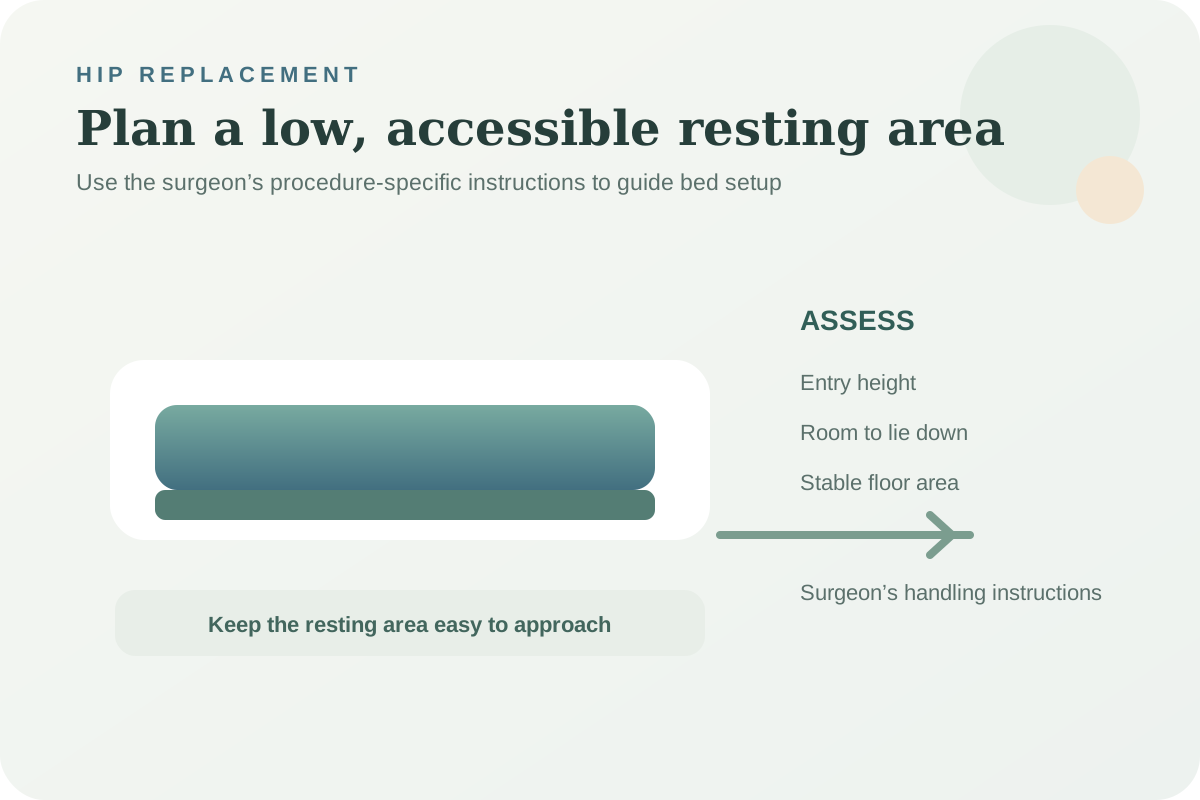
- Entry height: measure the top surface from the floor. Ask whether the dog should step over any rim or whether a flat entry is preferred.
- Usable sleeping area: compare the dog’s comfortable resting length and width with the bed’s actual surface.
- Stable placement: keep the bed on a floor surface that does not slide, and avoid locations that require access to furniture or stairs.
- Washable cover: choose a cover that can be removed without moving the bed or dog in an unsafe way.
- Support equipment: confirm that the bed does not interfere with a sling or other device prescribed by the team.
Should the dog use stairs or jump onto a bed?
Do not use household steps or furniture as a workaround unless the surgeon has approved it. Ask the clinic how the dog should be transferred and whether a floor-level recovery space is appropriate.
When can you switch to a normal orthopedic bed?
There is no universal date. The surgeon should confirm that the repair is healing and explain when the dog can change its activity level or resting arrangement. Keep the approved setup until that guidance changes.
What if the bed has a bolster?
Compare the bolster’s height with the dog’s current ability to enter and leave the bed. A high wall can become an obstacle. A flat mattress or low edge may be easier to manage, but the surgical team should approve the choice if mobility is limited.
For other post-operative bedding questions, read the waterproof bedding guide and flat versus bolster comparison .
Veterinary and reference sources
- American College of Veterinary Surgeons: Cranial Cruciate Ligament Disease
- Cornell University College of Veterinary Medicine: TPLO recovery overview
- American College of Veterinary Surgeons: Postoperative Care After Surgery
- American College of Veterinary Surgeons: Canine Hip Dysplasia (hip replacement aftercare context)
- VCA Animal Specialty Group: TPLO recovery and follow-up care
- VCA: Total Hip Replacement in Dogs
Sources provide clinical context. This site does not provide individualized medical advice or replace discharge instructions.