THE PRACTICAL GUIDE
Focus: best dog bed after TPLO surgery, TPLO recovery setup at home dog bed, dog bed after cruciate surgery
What does a TPLO recovery bed need to do?
TPLO (tibial plateau leveling osteotomy) changes the mechanics of the knee by cutting and repositioning the top of the tibia, then stabilizing the bone with implants. The bone needs time to heal, so the recovery area should make the prescribed rest arrangement easier to maintain—not encourage extra movement. The American College of Veterinary Surgeons describes TPLO as a procedure requiring several weeks of confinement while the bone heals.
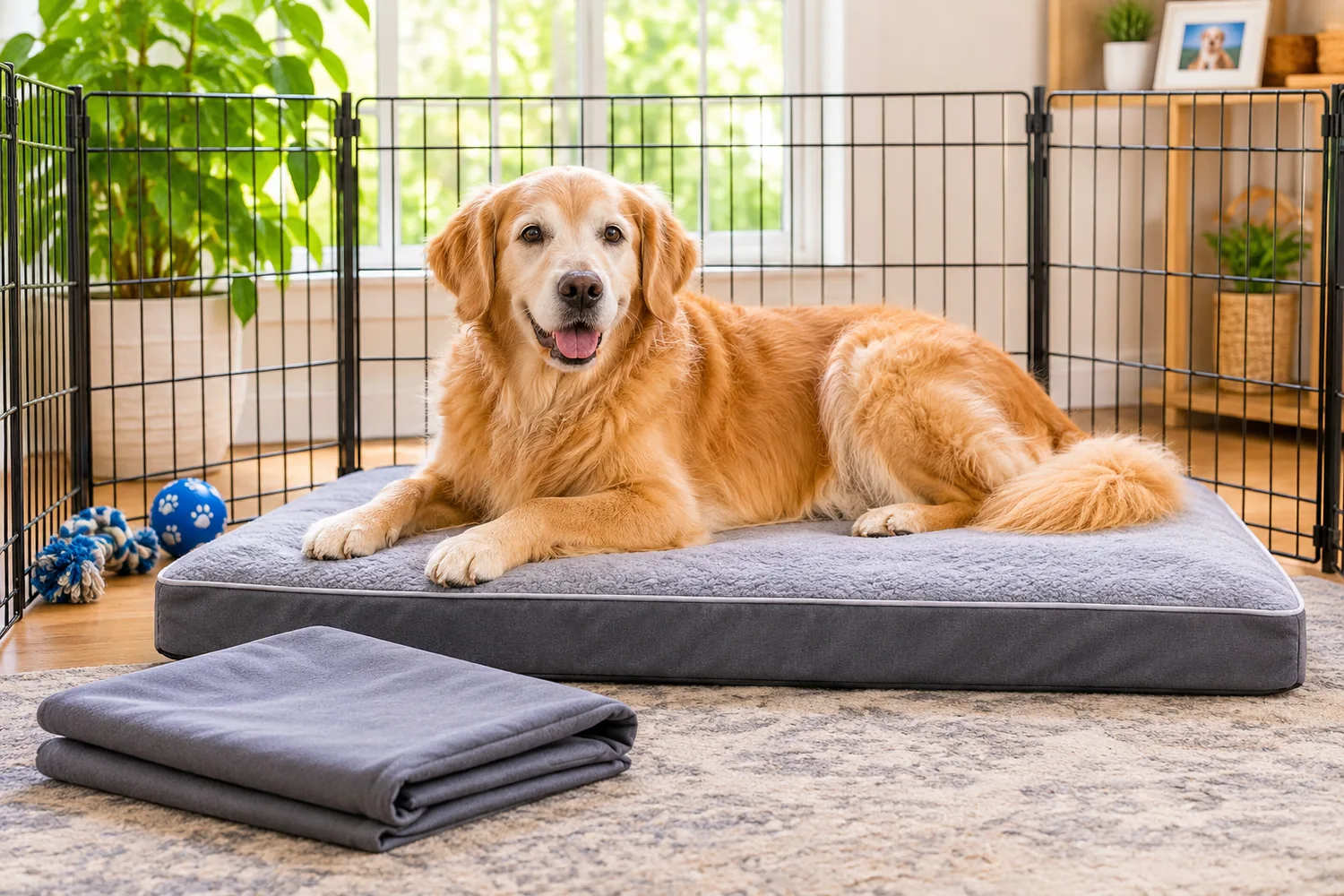
- Fit the approved enclosure: the pad should lie flat within the crate or recovery area without curling up, bunching or blocking the door.
- Make entry uncomplicated: avoid making the dog step over a tall bolster or raised rim when a flat surface can meet the surgeon’s instructions.
- Stay clean and dry: choose a removable cover and plan for a spare. Add a waterproof barrier when the care team recommends it or when accidents, drainage or wet compresses make it useful.
- Be manageable: the cover should be practical to remove and wash without wrestling with the dog or dismantling the recovery space.
How should bedding change as recovery progresses?
Think in terms of checkpoints, not universal week numbers. Some hospitals use strict crate confinement; others prescribe a small room or pen with carefully controlled access. Cornell’s TPLO recovery overview describes restricted activity during the first eight weeks and a recheck before a gradual return to normal activity. Your dog’s actual plan may differ.
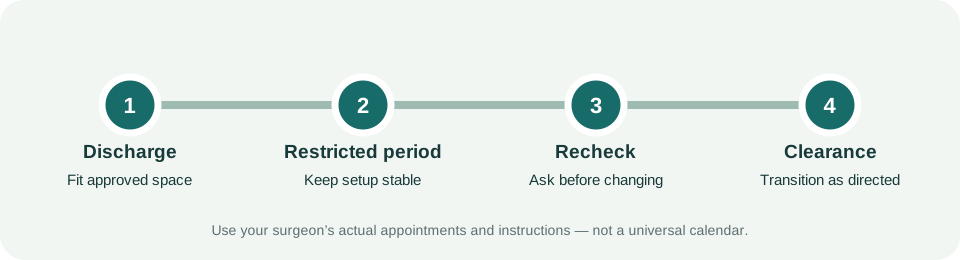
| Recovery checkpoint | Bedding decision | What must be confirmed |
|---|---|---|
| Discharge and initial home period | Choose a low-profile pad that fits the exact crate or restricted area. Keep a clean spare ready. | Approved enclosure, assistance needed to get up, incision and dressing instructions. |
| Ongoing restricted activity | Keep the same stable footprint unless the care team changes the setup. Replace wet or soiled layers promptly. | Whether a crate, pen or small room is allowed; whether a sling or other support is needed. |
| Recheck / imaging checkpoint | Do not treat the appointment date as automatic clearance. Keep current bedding until the surgeon changes restrictions. | Whether healing is adequate and what activity progression, if any, is approved. |
| After clearance | Transition to a long-term bed gradually, keeping entry height and floor traction practical. | Any remaining limits on jumping, stairs, furniture or unsupervised activity. |
How do you choose the right crate pad size?
Measure the inside floor of the crate, not the outside product dimensions. Then compare that space with the dog’s natural lying length and width. The dog must have the posture room specified by the veterinarian, and the pad must fit without folding or curling. A 36-, 42- or 48-inch crate label is not a reliable substitute for measuring the actual interior—brands and models differ.
Do not downsize a crate to force a dog to remain still, and do not enlarge the space without checking the discharge plan. The correct enclosure is the one selected by the treating team for this patient.
Is a waterproof layer necessary after TPLO?
Not every dog needs the same waterproof setup. A washable top cover is useful for routine cleaning. A separate waterproof barrier can protect the mattress when the dog has urine accidents, wound drainage, wet compresses or another specific reason identified by the care team. Look for a clearly stated waterproof membrane or sealed liner rather than relying on the word “water-resistant.” Keep the surface that touches the dog clean and dry, and follow any instructions about dressings or the incision.
Can my dog sleep in my bed after TPLO surgery?
Do not allow bed access unless the surgeon has specifically approved it. Jumping up or down, slipping off an edge or twisting during a lift can conflict with post-operative restrictions. A floor-level recovery station near your bed may be a practical alternative when it is consistent with the prescribed confinement setup. Ask the surgical team how to move or lift your dog safely.
What should you avoid when shopping?
- A pad that is too large and bunches against the crate walls or door.
- A tall, stiff bolster that creates an unnecessary step-over for a dog with a sore or restricted leg.
- Unverified thickness or “orthopedic” claims without actual dimensions and construction details.
- Heated or electric bedding unless the veterinary team has approved that specific setup.
- Any plan that changes the allowed confinement area without clearance.
When should you call the surgical team?
Contact the veterinary team for concerns about worsening pain, sudden changes in limb use, persistent difficulty getting comfortable, incision redness or discharge, a wet or damaged dressing, trouble urinating, or any change that worries you. ACVS advises owners to follow discharge instructions and contact their veterinary team when post-operative concerns arise.
Sources and scope
This page uses veterinary sources for procedure and recovery context. Bed-selection criteria are editorial purchasing guidance, not a clinical prescription. Follow your own surgeon’s written discharge plan.
Veterinary and reference sources
- American College of Veterinary Surgeons: Cranial Cruciate Ligament Disease
- Cornell University College of Veterinary Medicine: TPLO recovery overview
- American College of Veterinary Surgeons: Postoperative Care After Surgery
- American College of Veterinary Surgeons: Canine Hip Dysplasia (hip replacement aftercare context)
- VCA Animal Specialty Group: TPLO follow-up and activity restriction example
Sources provide clinical context. This site does not provide individualized medical advice or replace discharge instructions.